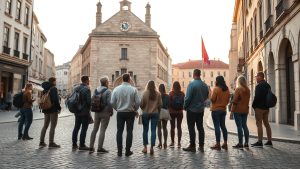
Something has shifted in how people travel for culture. The old model, the one built around ticking off monuments and queueing for the same three photographs, is losing its grip. In its place comes something slower, more participatory and more conscious of the communities being visited. If you are planning next year’s trips, these are the cultural tourism trends to watch in 2026 — not as predictions to bet on, but as practical signals about where the experience is heading.
The through-line is simple: travellers want context, contribution and a bit of genuine human contact. They are less interested in being shown culture and more interested in taking part in it, however modestly. That changes what a good itinerary looks like, what it costs, and how far in advance you need to think.
Slower travel, longer stays and deeper local roots
The most visible change is duration. A weekend in a capital city, once the default cultural break, is being stretched into a week or a fortnight in a single region. The logic is straightforward. You cannot understand a place in forty-eight hours, and travellers increasingly know it. A slow stay in a mid-sized town gives you the market on Tuesday, the church bells on Sunday, the same cafe owner recognising you by day four.
Why now? Remote and hybrid work have loosened the calendar, and the cost of multiple short flights has made one longer trip look sensible. But there is a cultural driver too. The appetite for depth over breadth is real, and it favours places that reward repeat visits.
The practical implication is that you should build slack into your plans. Book a base for at least five nights, then leave days deliberately unplanned. Learn twenty words of the local language. Eat where the menu is not translated. The reward is not a better photograph; it is a better memory.
Participation over observation: workshops, crafts and everyday rituals
Cultural tourism used to mean looking. Now it increasingly means doing. Pottery classes in small studios, bread-making with a village baker, learning a regional dance badly and enjoying it anyway — these are the experiences filling up fastest. The appeal is that you leave with a skill, however rudimentary, rather than a souvenir.
This trend is growing because it solves a problem both sides feel. Travellers get access and authenticity. Local artisans get income that does not depend on selling objects to people who will never use them. It is a fairer exchange than a coach tour and a gift shop.
For planning, the key is to book early. Genuine workshops have small capacities and often run only once or twice a week. Look for sessions led by the maker themselves, not by an agency reselling a generic experience. And go in with humility. You are a guest in someone’s working life, not a customer buying a performance.
Digital storytelling and the rise of the self-guided cultural trail
Phones were once the enemy of cultural immersion. Now they are becoming a quiet ally. Audio walks, location-triggered stories and well-made self-guided trails let you move through a neighbourhood at your own pace, hearing from residents, historians and musicians rather than a single guide with a script.
The growth here is partly practical and partly generational. Independent travel is rising, and not everyone wants a group. Digital storytelling fills the gap, offering context without the crowd. The best of it is made with local contributors and feels like a conversation rather than a lecture.
What this means for you is more control and more responsibility. Download what you need before you go, because signal is never guaranteed. Choose trails that name their contributors and pay them. And resist the urge to follow a route slavishly. The point of a self-guided trail is that you can stop, wander off and follow your curiosity down a side street.
Local benefit as a deciding factor, not an afterthought
More travellers are now asking a question that used to come last: who actually benefits from this trip? It is shaping where people stay, what they book and how they behave. Homestays, community-run guesthouses and locally owned tour operators are seeing demand grow, not because they are cheaper, but because the money stays put.
This is partly values-driven and partly a reaction to over-tourism. Places that were loved to death have made the trade-offs visible, and travellers have noticed. Nobody wants to be the reason a neighbourhood becomes unlivable.
Practically, this means doing a little homework before you book. Check who owns the accommodation. Ask whether a tour operator employs local guides year-round or hires seasonally. Choose experiences where the people whose culture you are enjoying are the ones being paid for it. It is not about purity; it is about direction of travel.
Off-season and lesser-known places moving up the list
The famous sites are not going anywhere, but the queue for them is getting harder to justify. In response, travellers are shifting their attention to shoulder seasons and to regions that never made the front of the guidebook. A ceramics town in February, a coastal path in October, a second city that everyone passes through on the way to somewhere else.
The advantages are obvious. Fewer people, lower prices, and a warmer welcome because you are not the four-hundredth visitor of the day. The cultural experience is often richer too, because you are not competing for space with a crowd.
Planning-wise, off-season travel asks more of you. Some museums and restaurants close. Transport runs less often. Check opening hours carefully, build in a spare day, and accept that some things will simply be shut. The trade is usually worth it. You will see the place as it actually lives, not as it performs for visitors.
Climate-conscious cultural travel and the return of the train
How you get there is now part of the cultural experience, not separate from it. Night trains, regional rail and slower overland routes are coming back into fashion, and not only for environmental reasons. Arriving by land gives you a sense of distance travelled, a gradual shift in landscape and language that a flight erases.
This trend is growing because the numbers have changed. Rail routes that were written off are being revived, and travellers who care about their footprint are choosing them even when they cost more time. The cultural payoff is real: you see the country between the cities, which is often where the most interesting things are.
For your own planning, think about the journey as part of the trip rather than dead time. Book sleeper cabins early, they sell out. Allow a buffer for delays. And if a route is genuinely impractical, do not agonise. A single well-chosen train leg, woven into a longer trip, is a reasonable compromise for most people.
What this means for your 2026 trip
Step back and a pattern emerges. The cultural tourism trends to watch in 2026 all point the same way: fewer places, longer stays, more doing and more local benefit. The checklist is out; the relationship is in.
So plan differently. Pick one region rather than five cities. Book a base for a week and leave room for nothing in particular. Choose one workshop led by someone who actually makes things. Download a self-guided trail from a source that credits its contributors. Travel in the shoulder season if you can, and take the train for at least part of the journey.
None of this requires a bigger budget, though some of it costs more than the cheapest option. It does require a bit more thought, a bit more patience and a willingness to be a guest rather than a consumer. The travellers getting the most out of culture right now are not the ones who have seen the most. They are the ones who stayed long enough to be seen themselves.