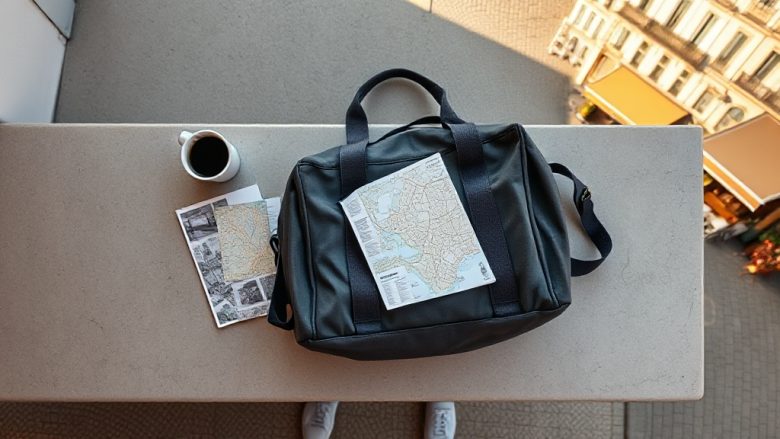
It’s Sunday at 6pm. You’re on a train home with aching feet, a phone full of photos you haven’t looked at, and a vague sense of having spent two days sprinting through a city rather than actually being in it. You ticked off the cathedral, the museum, the famous market, and the viewpoint everyone posts online. And yet the trip feels like something you survived rather than something you enjoyed.
Most weekend breaks don’t go wrong because of bad destinations or insufficient research. They go wrong because of structure. Too much packed in, the wrong base, no room for the city to surprise you. The good news is that learning how to improve your weekend city breaks rarely means doing more planning. It usually means doing less, more carefully. Here are the five failures that ruin most short trips, and the specific fix for each.
1. You overpack the schedule and treat the trip like a checklist
The single biggest killer of a good weekend break is the itinerary that looks like a project plan. Six sights on Saturday, four on Sunday, dinner booked at a fixed time, and a walking route that assumes you’ll move at the speed of a map rather than a human being.
This happens for understandable reasons. You’ve paid for flights and a hotel, you’ve taken time off, and there’s a quiet anxiety that if you don’t see the headline attractions you’ve somehow wasted the trip. So you front-load everything. The result is a weekend spent looking at your watch and calculating whether you can squeeze in one more thing before the next booking.
The fix is to build your weekend around one anchor per half-day, not per hour. Pick a single thing that genuinely matters to you for Saturday morning, one for Saturday afternoon, one for Sunday morning. Everything else is optional and gets decided on the day, based on energy, weather, and what you stumble across. If you’re the sort of person who needs a plan, write the optional extras on a list and treat them as a menu, not a schedule.
There’s a useful test. If you had to cut your itinerary in half, which half would you actually miss? Those are the anchors. The rest was filler you added because it appeared on a list somewhere.
2. You book the wrong neighbourhood and spend the weekend commuting
Hotel choice is usually made on price and star rating, with location treated as a secondary concern. That’s backwards for a two-night trip. A cheap room twenty-five minutes from the centre isn’t cheap once you’ve paid for transport twice a day and lost an hour of your short break to it.
The better approach is to choose your base by what you want your evenings to look like. If you want to walk out of the door and be somewhere with life in it, book in the district where people actually eat and drink, not the business quarter that empties at 6pm or the area around the main station. Station districts are convenient on paper and grim in practice. You arrive, you drop your bag, and then you leave immediately, which tells you everything.
Aim for a base within a fifteen-minute walk of the part of town you’ll spend most of your evenings in. That walk becomes the best part of the trip, not a chore. You’ll pass the same square three times, notice a bakery on day one and buy something from it on day two, and start to get a feel for the place that no amount of sightseeing delivers.
If you’re unsure which area that is, look at where the city’s residents go for a Saturday morning, not where the tour buses stop. That’s usually the right answer.
3. You ignore transit time and treat the map as the truth
Maps lie to weekend visitors. A twenty-minute walk on a screen is a thirty-five-minute walk when you’re lost, hungry, and standing at a junction with three identical-looking streets. A metro journey that looks like three stops is fifteen minutes once you’ve found the entrance, bought a ticket, and waited on the platform.
Most people build their weekend plan by measuring distances as the crow flies and assuming perfect efficiency. Then reality arrives, and the plan collapses by Saturday lunchtime.
The fix is to budget transit at roughly double what the map suggests, and to cluster your anchors geographically rather than thematically. If your Saturday morning anchor is in the old town, put your Saturday afternoon anchor within walking distance of it, even if something more exciting is on the other side of the city. You can’t do everything, and a weekend that moves in one direction is far more enjoyable than one that zigzags.
It also helps to accept that public transport in an unfamiliar city has a learning curve. The first journey takes longer than the rest. Give yourself that grace on day one rather than scheduling your most time-sensitive activity for the moment you arrive.
4. You eat at tourist-trap restaurants and waste your best meals
Food is often the most memorable part of a city break, and it’s also the part most people get wrong. The failure mode is predictable. You’re tired, you’re near a major attraction, you’re hungry, and the first menu you see is in four languages with photos. You sit down. You pay too much for something mediocre. You do it again the next day because you haven’t planned anything better.
The remedy isn’t exhaustive restaurant research. It’s a simple rule: never eat within sight of a major landmark. Walk ten minutes in any direction and the quality goes up while the price goes down. This one habit will improve your weekend city breaks more than any guidebook.
Beyond that, pick one meal per day to care about. Book it, or at least know where you’re going. Let the other meals be casual and discovered. That way you get one genuinely good experience daily without turning every meal into a logistical exercise.
Breakfast is worth a mention too. Hotel breakfasts are often the worst value of the trip. Skipping them and finding a local café does two things: it gets you out into the city early, and it gives you a reason to wander a neighbourhood before the crowds arrive. That early hour is often the best of the whole weekend.
5. You leave no buffer, so one delay ruins the day
The final failure is the one that turns a good weekend into a stressful one: no slack. No gap between activities, no allowance for a delayed train, no time to sit down, no room for the thing you didn’t know about until you got there.
Buffers feel like waste when you’re planning. They’re not. They’re what allows a trip to breathe. A weekend with three hours of unassigned time across two days will feel twice as relaxed as one that’s fully booked, and you’ll still see almost as much.
Build buffer in three places. Leave a gap between your arrival and your first commitment, because travel days rarely run to schedule. Leave an hour unassigned each afternoon, ideally somewhere pleasant to sit. And never book anything tightly before your journey home, because the last thing you want is to spend your final hours watching the clock.
If you’re travelling with someone else, agree in advance that one anchor can be abandoned without argument. Having permission to skip something removes the pressure that makes people push through when they’re tired, and pushing through is how weekends turn into forced marches.
Your short pre-trip checklist
Before you go, run through this quickly. One anchor per half-day, and nothing else fixed. A base within a fifteen-minute walk of where you want to spend your evenings. Transit time doubled, and anchors clustered geographically. One meal per day worth planning, and no eating beside a landmark. At least three hours of unassigned time across the weekend, plus a clear gap before your journey home.
That’s it. None of it requires more research, a better app, or a longer list of recommendations. It requires deciding, in advance, to do less and leave room. The cities you remember fondly are rarely the ones you covered most efficiently. They’re the ones where you had a spare hour, followed your nose, and found something you’d never have put on a plan.